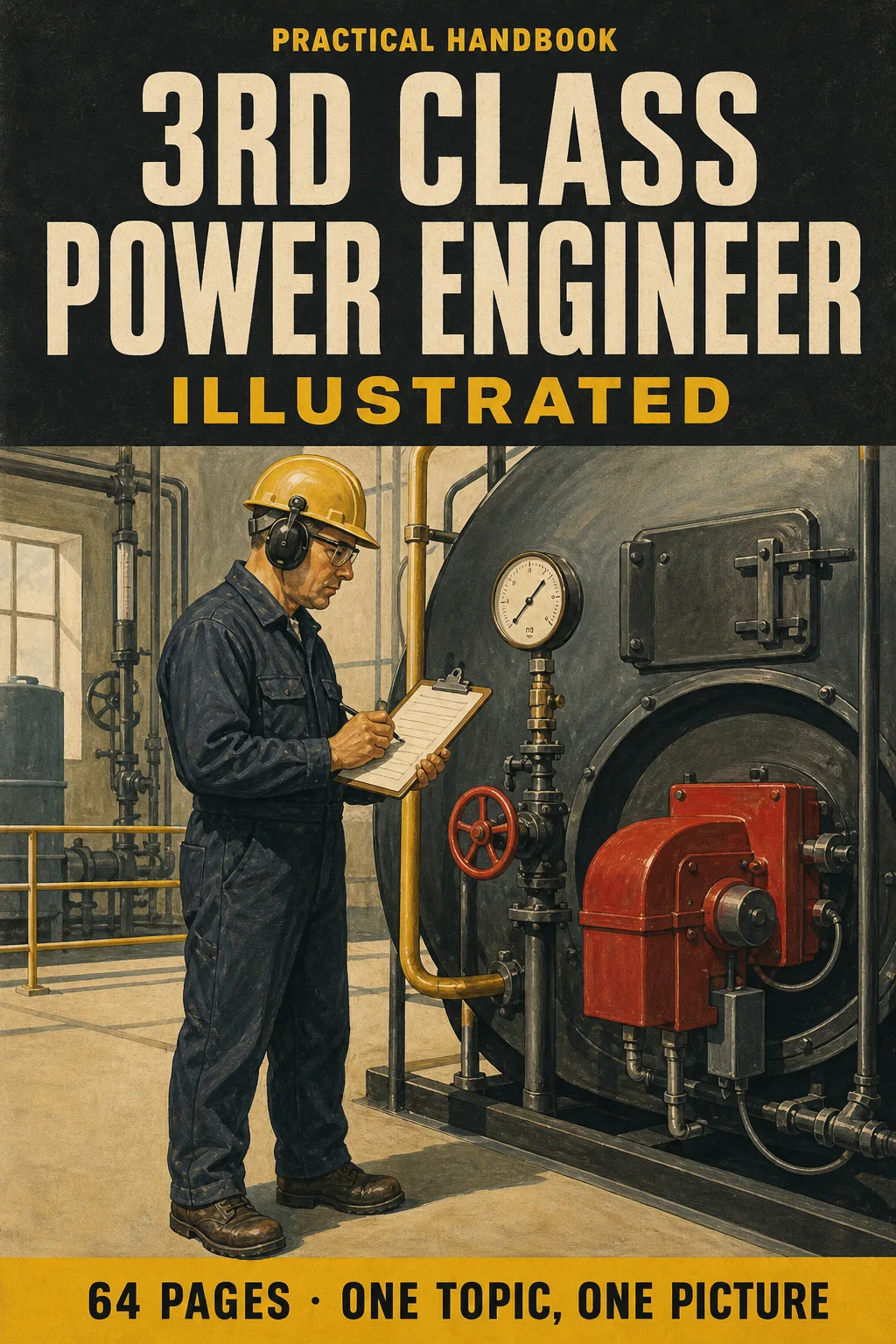
📄 Digital book in PDF · read it on your phone or print it
Boilers in cross-section, steam tables, combustion, the deaerator, blowdown, three-element control, safety valves, turbines and plant math. Every topic has its own page: the drawing first, then what you need to remember. 64 illustrated pages.
🔒 Secure checkout · PDF by email · 30-day guarantee
Every page has one large drawing and a box with the numbers, steps and traps you need to know:


Swipe to see more →
These are real pages from the book. The table of contents is the full one: 9 parts and 60 topics.
You're at the kitchen table after a 12-hour shift, textbook open at three-element feedwater control. Drum level, steam flow, feedwater flow: three signals, and by the fourth page they blur together.
The textbook covers it in paragraphs: feedforward, trim, cascade, shrink and swell. Nowhere does one drawing show which signal does what, and why drum level alone isn't enough. By morning it's gone.

In this book, that topic is one page. The three signals are drawn as one loop: steam flow tells the valve what's coming, feedwater flow checks what's going in, and drum level trims the rest. One look and you see why a swell doesn't fool it.
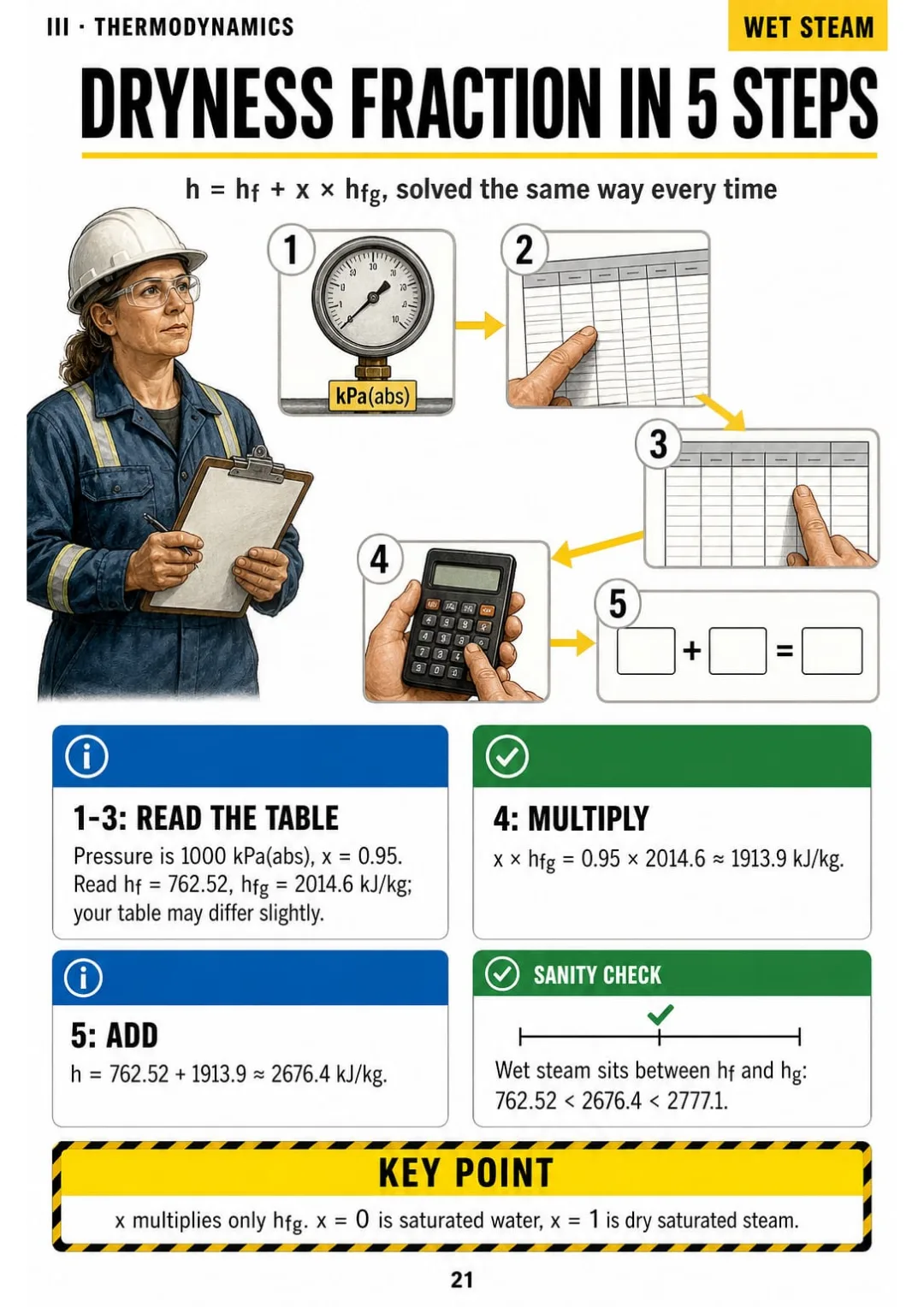
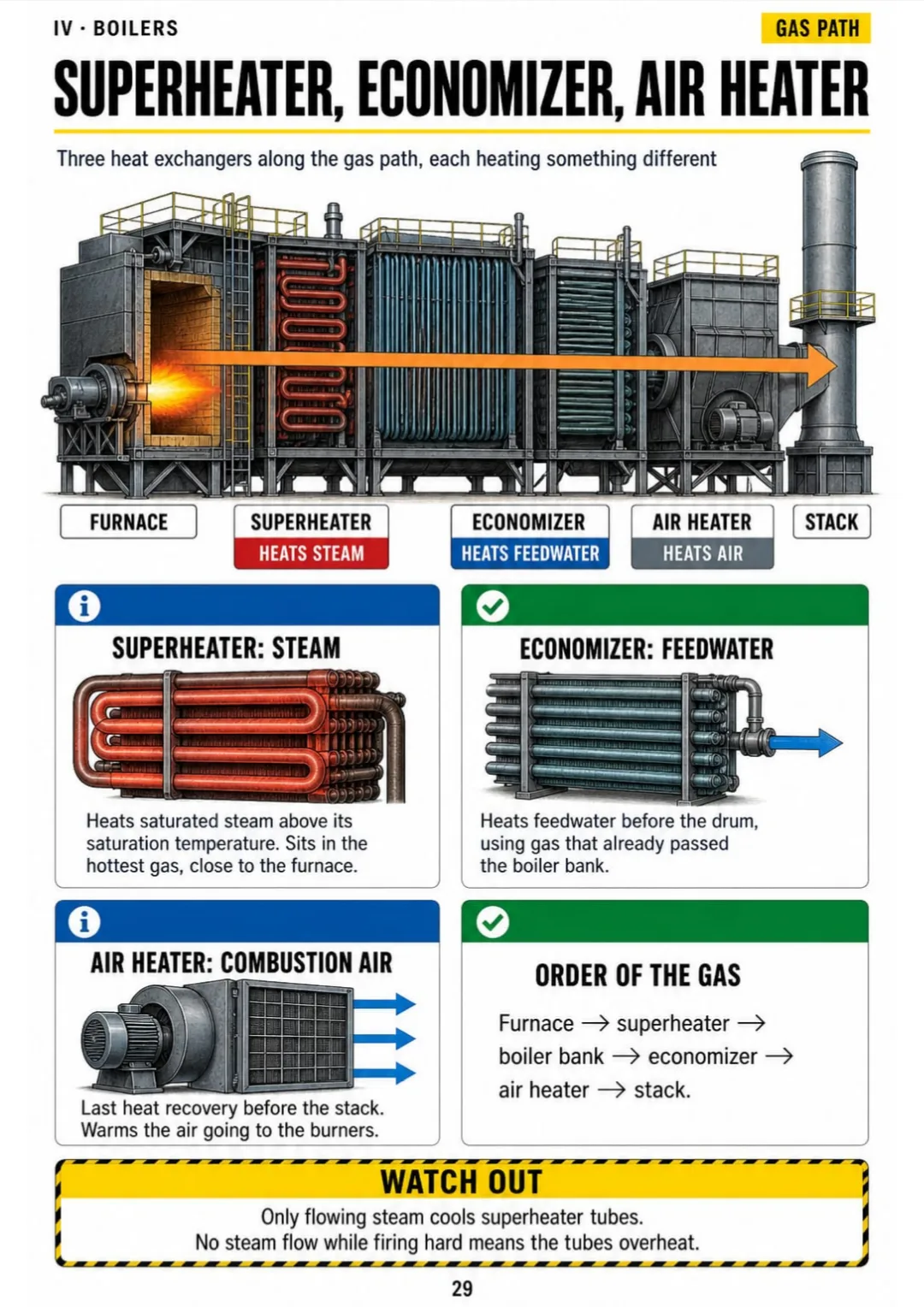
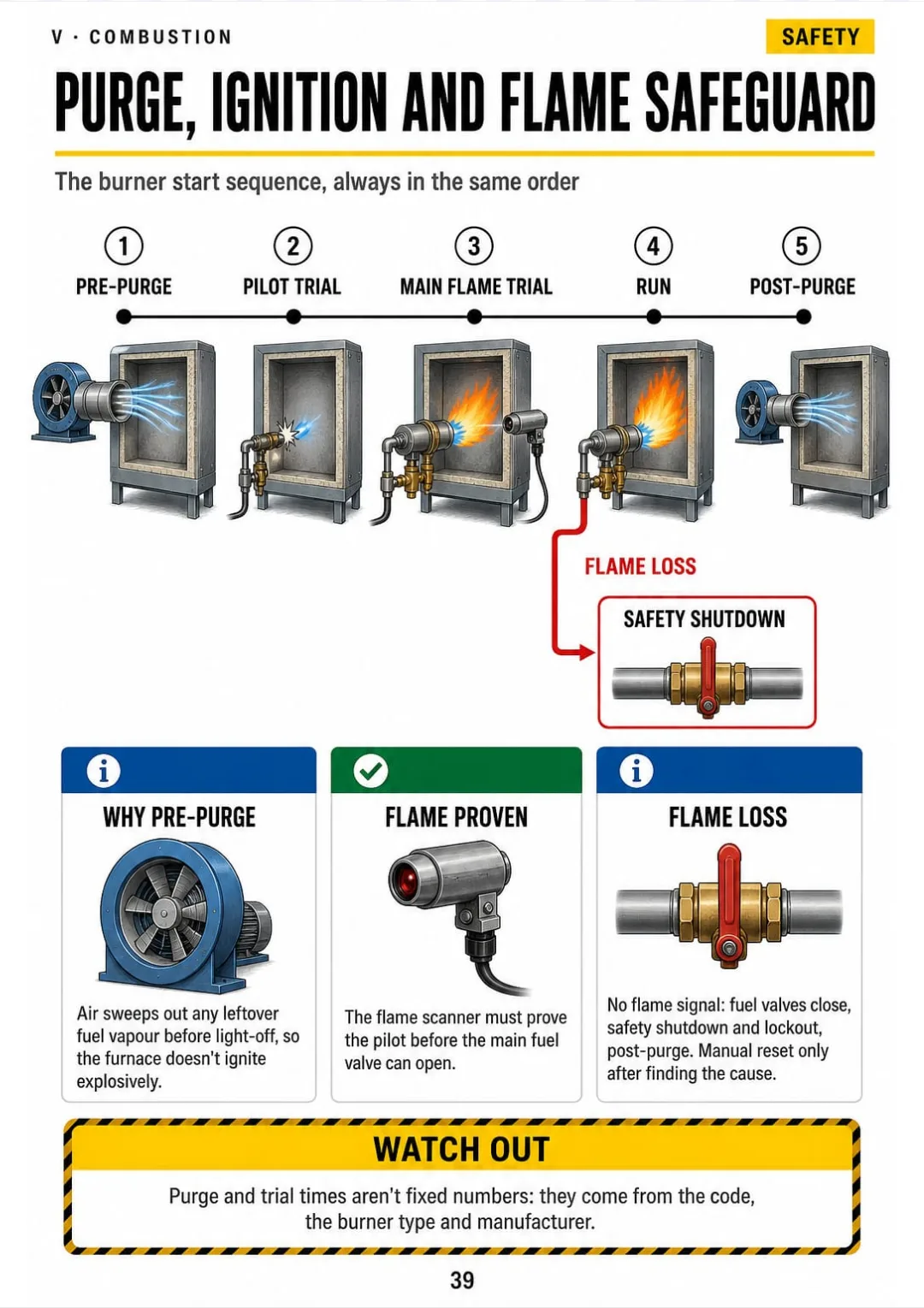
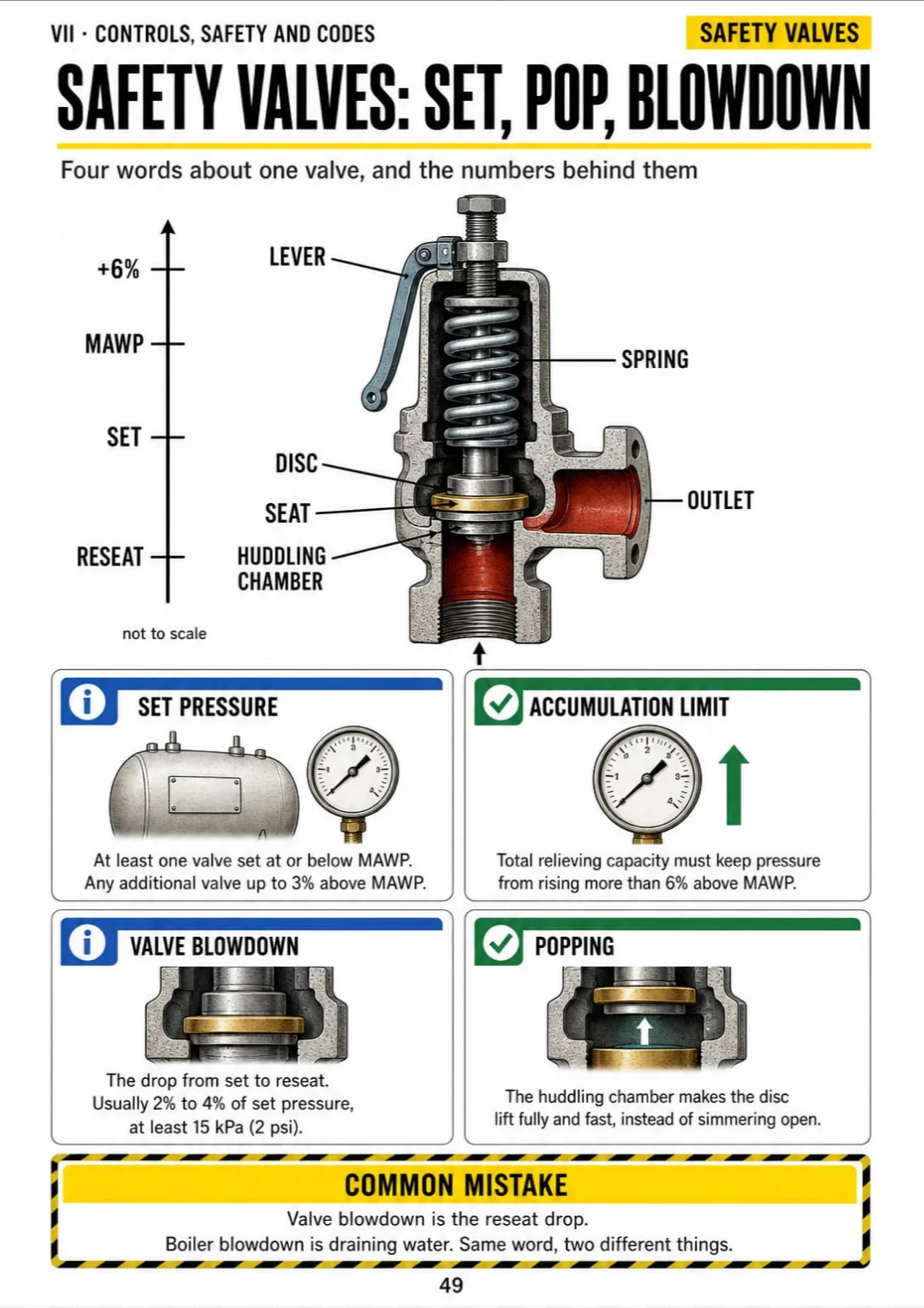
The same goes for dryness fraction, the gas path through the superheater, economizer and air heater, purge and flame safeguard, and safety valve set pressure and blowdown: each one has its own page.
You see how the heat moves through the boiler, and you can explain it on the paper or on shift without going back to the textbook.

Plant math, applied mechanics, thermodynamics and steam, boilers, combustion, feedwater and water treatment, controls and codes, turbines and pumps, and a final review before the papers: 64 pages, all illustrated.
Think of it this way:
You're on the paper and the question gives you steam at 1000 kPa absolute with a dryness fraction of 0.95, and asks for the enthalpy. You need the right column of the steam table, and the right order.
In the book, you open the dryness fraction page and see it in 5 steps: the water and the steam drawn as one bar, with the steam table values and the worked answer right beside it.

The same with gauge vs absolute pressure, boiler efficiency, theoretical air for natural gas, the blowdown calculation and three-element control: each one on its own page.
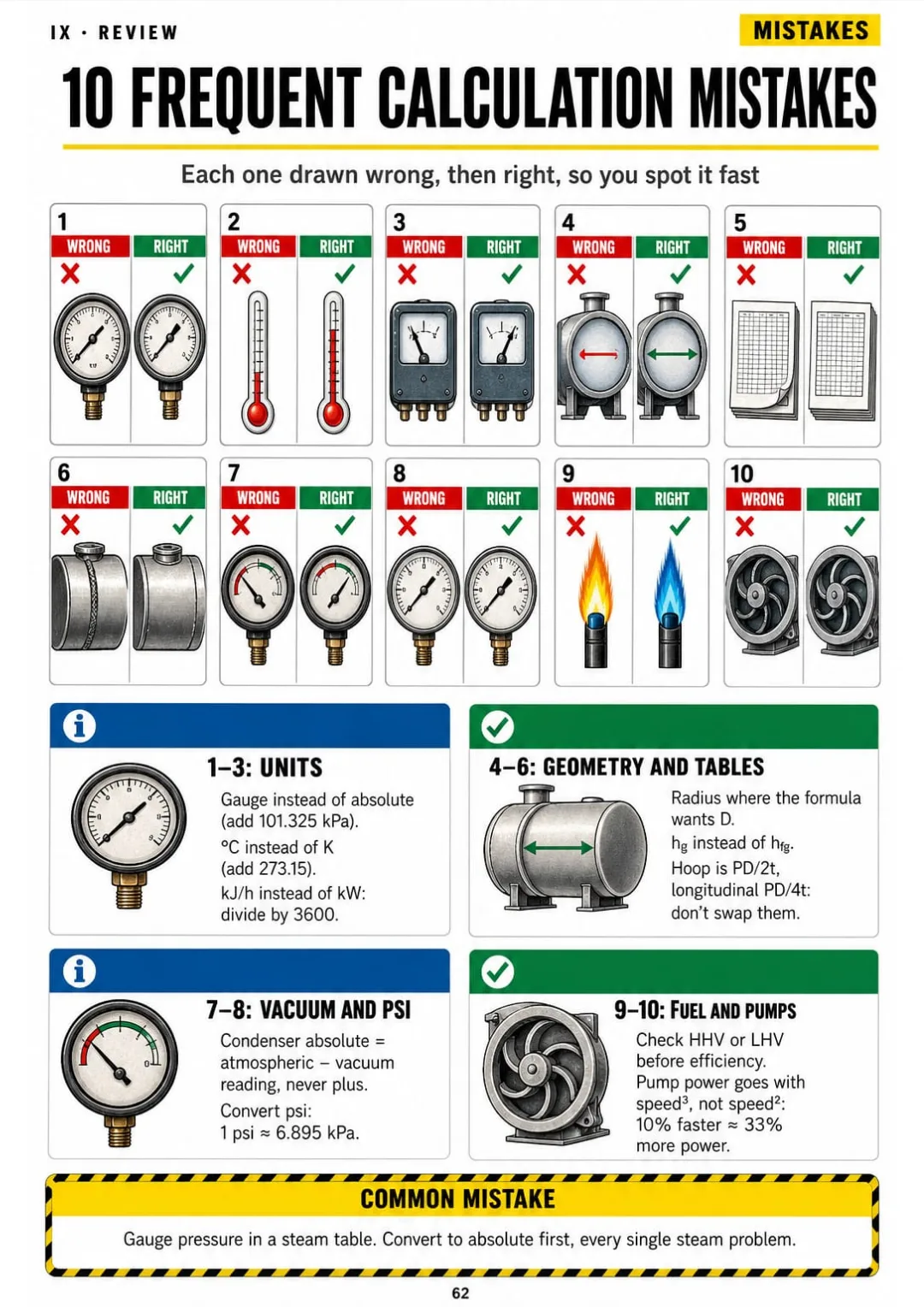
3rd Class Power Engineer Illustrated is 9 parts and 60 topics, all drawn, and it ends with every formula on one page, 10 frequent calculation mistakes and an exam day checklist.
What you see drawn, you don't have to memorize.
Stop losing marks on units: SI units, gauge vs absolute pressure, Celsius vs kelvin, the same 5 steps for every calculation, rearranging formulas and trigonometry for forces and piping.
Forces and resultants, moments and levers, friction, work and power, stress and strain, hoop stress in a drum and thermal expansion of pipe.
Sensible and latent heat, wet and superheated steam, which column of the steam tables, dryness fraction, interpolation, gas laws, the Rankine cycle and heat transfer.
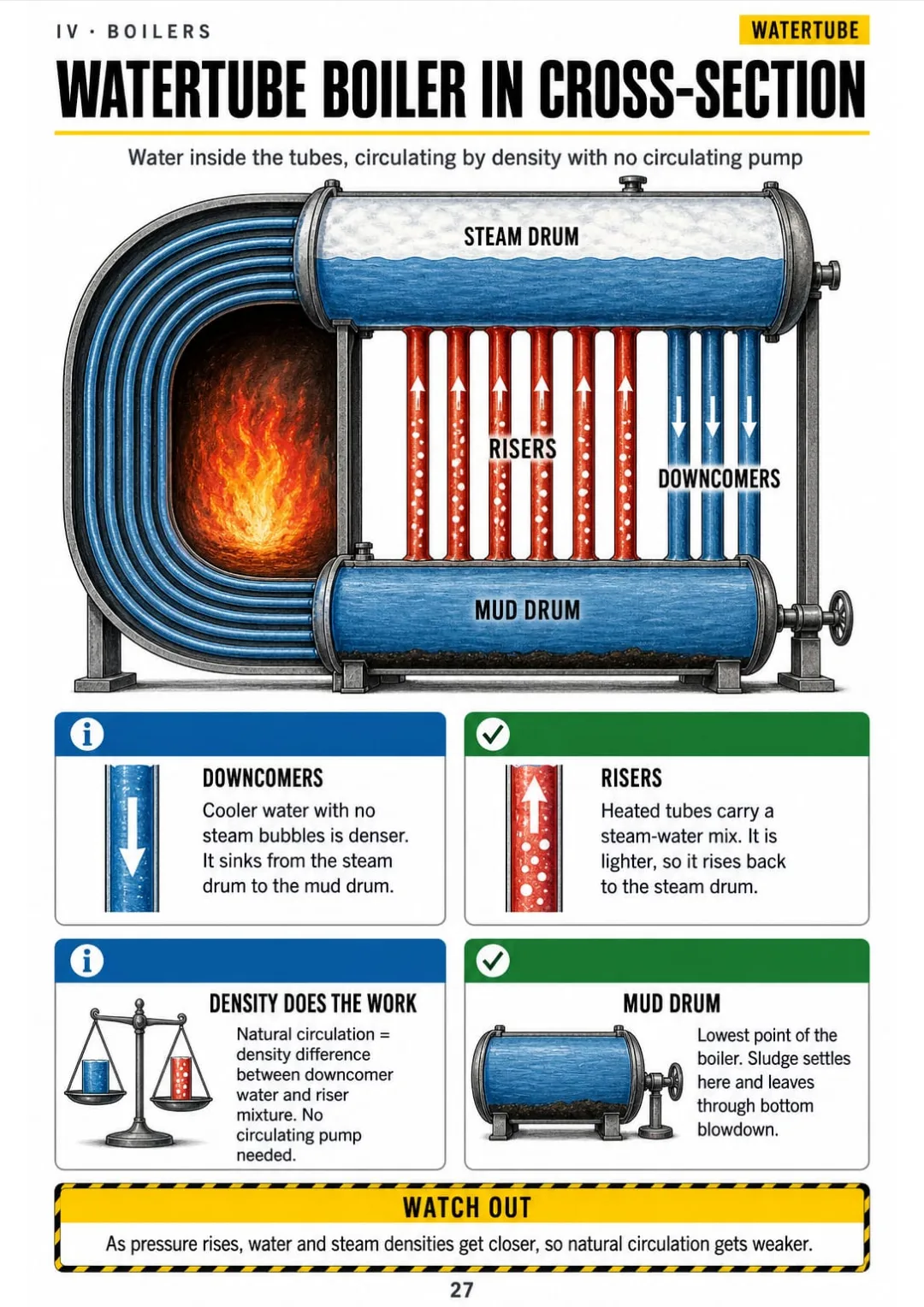
Firetube and watertube boilers in cross-section, drum internals, superheater, economizer and air heater, boiler horsepower, factor of evaporation, efficiency and heat balance.
The 3 Ts, combustion equations, theoretical air for natural gas, excess air and flue gas O2, burners and firing rate, and purge, ignition and flame safeguard.
What impurities do, the softener and demineralizer, the deaerator, oxygen scavengers, the blowdown calculation and continuous vs bottom blowdown.
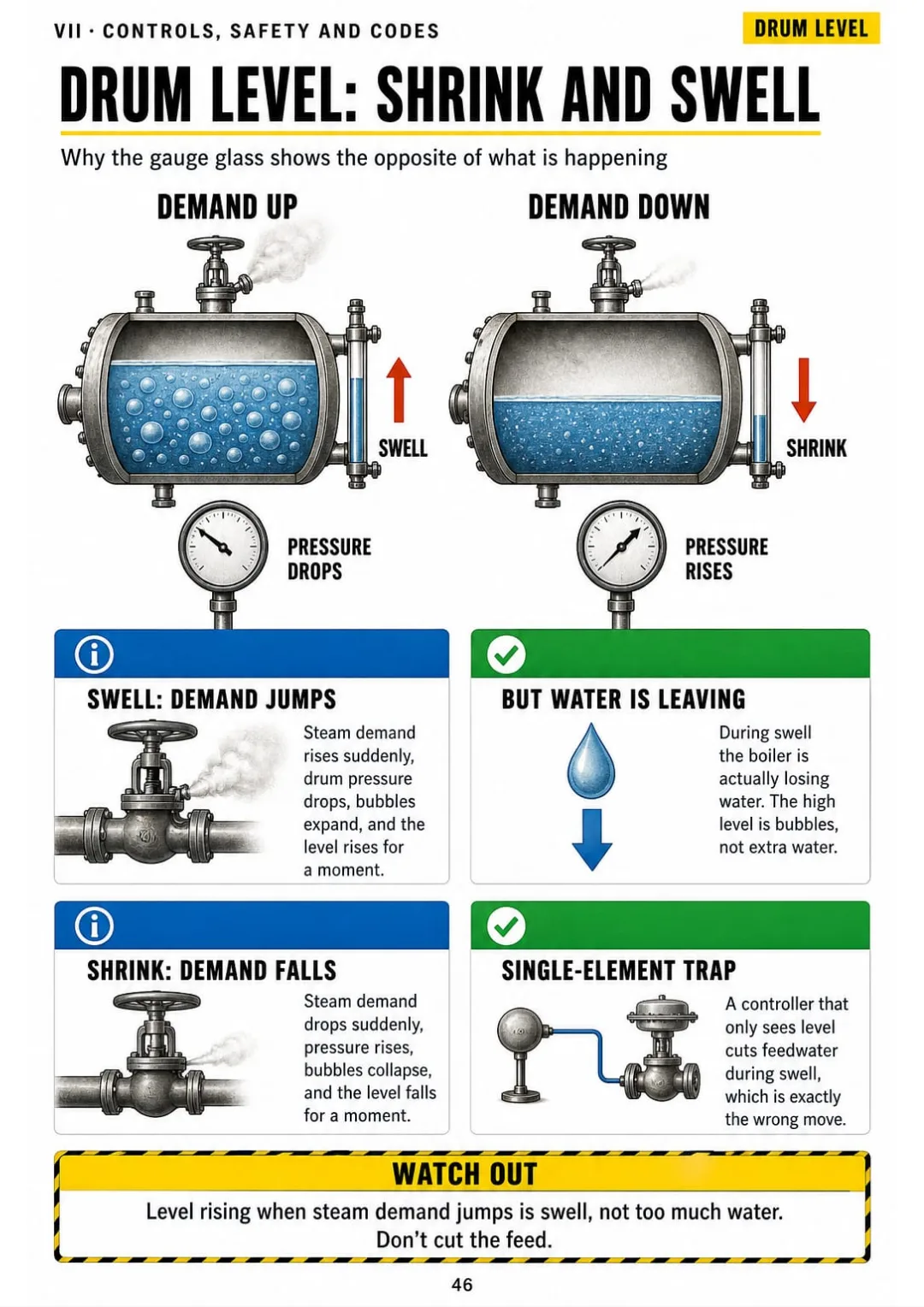
Shrink and swell, three-element feedwater control, P, PI and PID loops, safety valves, gauge glass and low-water cutoff, who enforces the codes, and lockout and confined space.
Impulse vs reaction turbines, turbine trips, the surface condenser, the gas turbine, centrifugal pumps and NPSH, affinity laws, the refrigeration cycle and plant electrical basics.
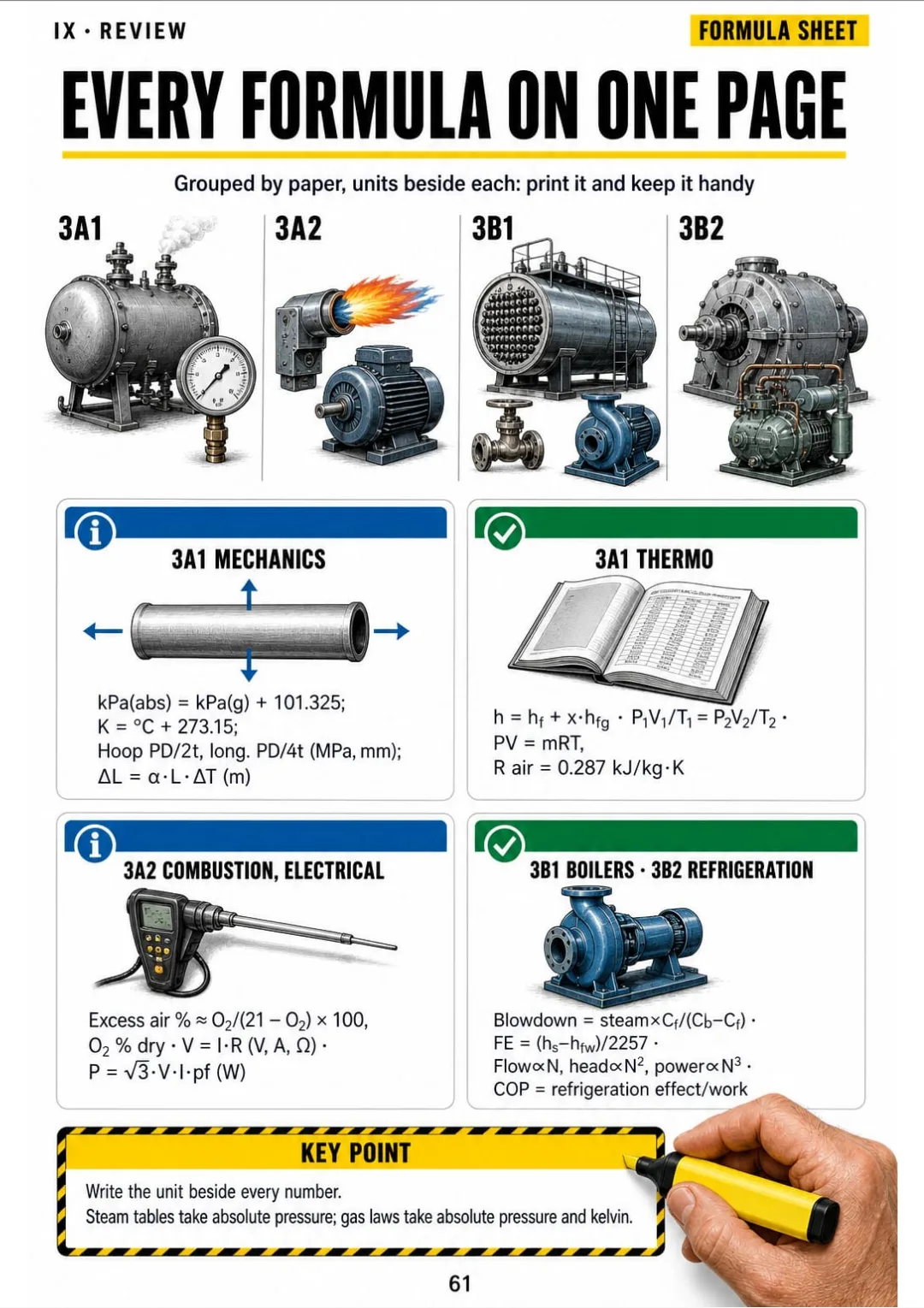
Every formula on one page, 10 frequent calculation mistakes, the same order for plant procedures and an exam day checklist.
At the end of the book: Every formula on one page, 10 frequent calculation mistakes and an exam day checklist.
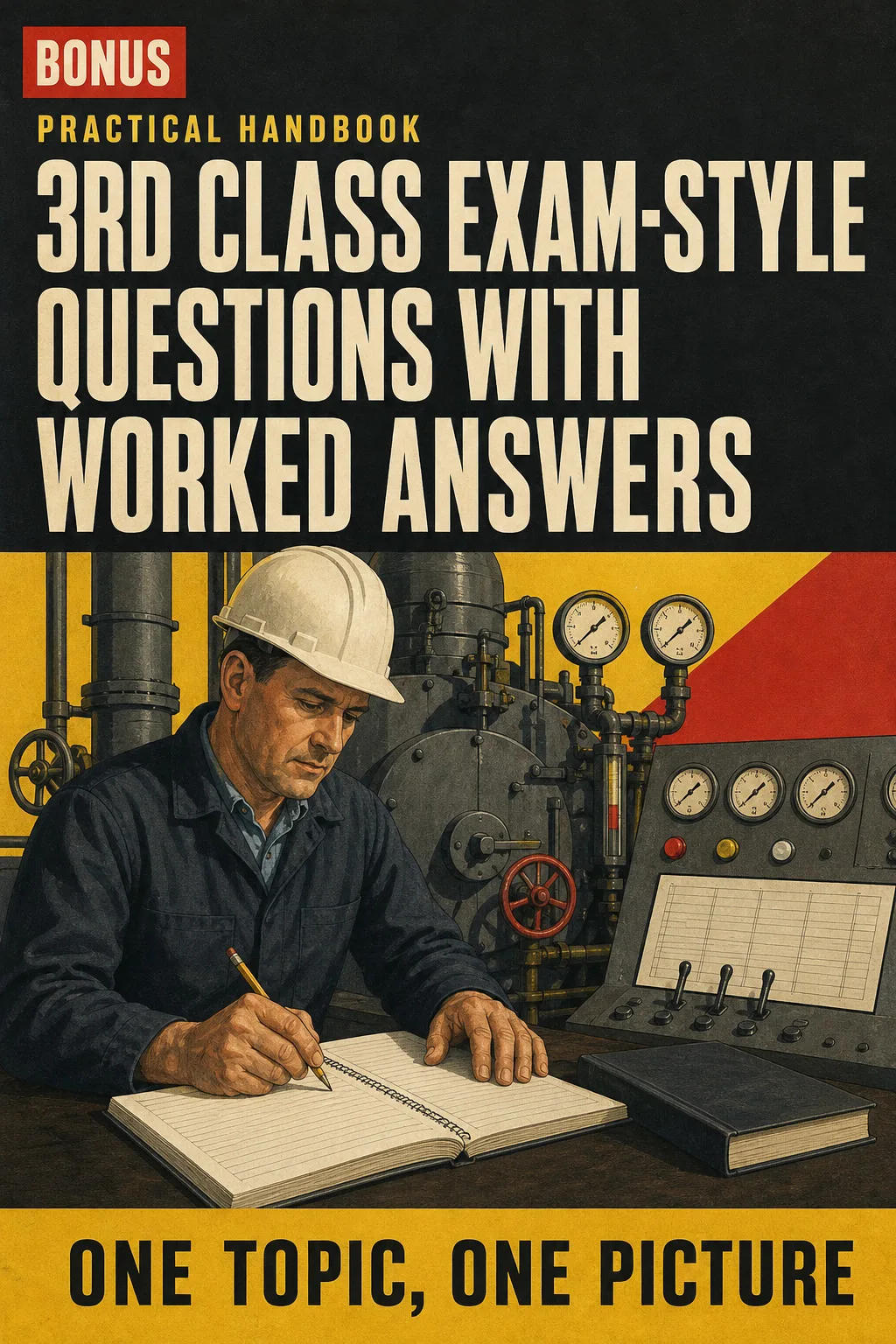
Practise with multiple-choice questions in the style of the 3rd class papers, each answer explained step by step so you see where the reasoning goes wrong.

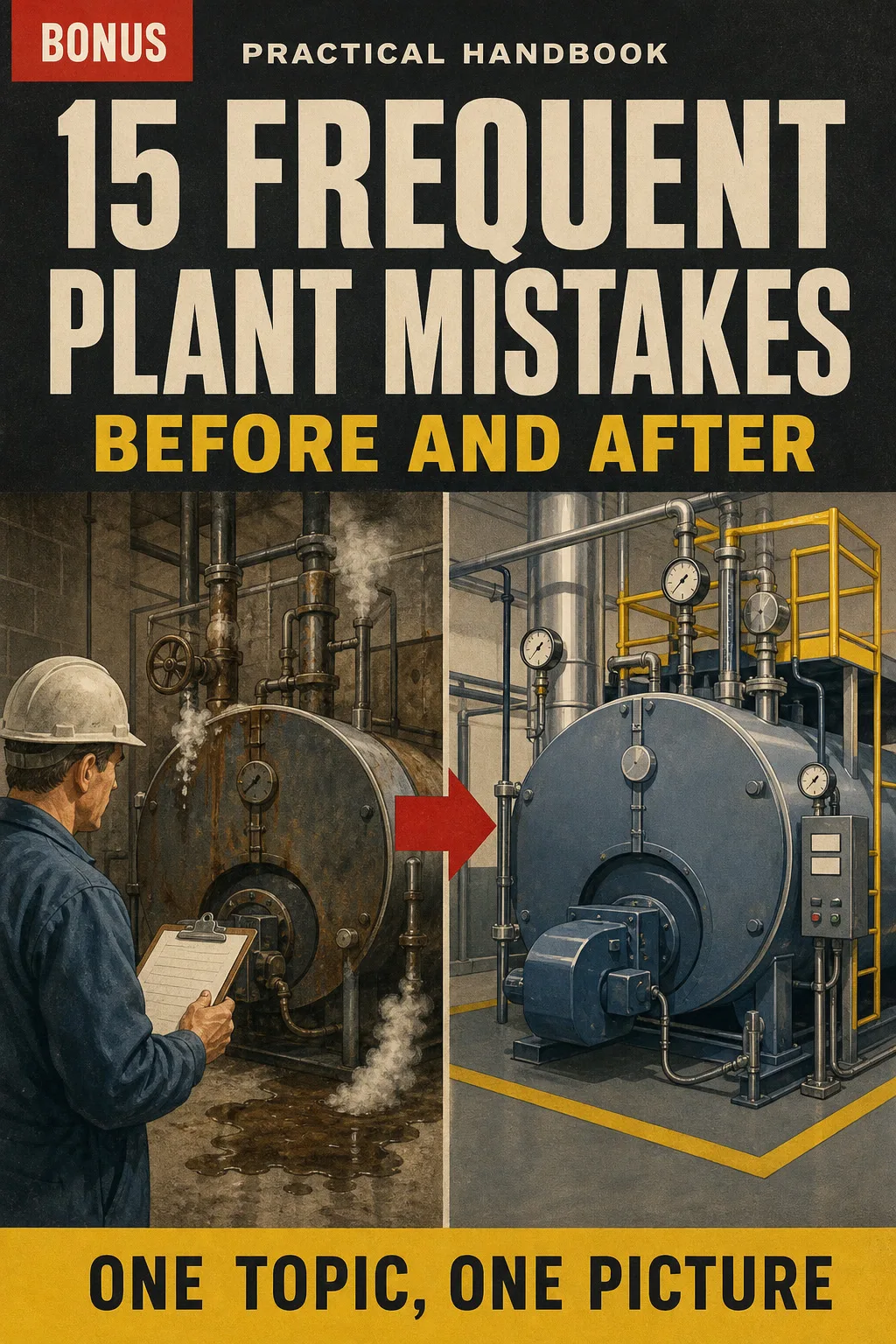
Review the mistakes that come up most often in theory and on shift, from misreading a gauge glass to mixing up gauge and absolute pressure, each one drawn wrong and then right.
📄 This is a digital PDF book sent to your email: nothing is printed or shipped.
PDF by email: We email you 3rd Class Power Engineer Illustrated as a PDF, together with the two free books. It's a single payment: no installments, no extra charges.
Each topic of the theory is one drawing you can read between shifts, so the boiler, the steam and the controls finally connect.
Every formula on one page, the 10 frequent calculation mistakes and the exam-style questions to check where your reasoning goes wrong.
The why behind what you see on rounds: shrink and swell, the burner sequence, the safety valve numbers, printed and kept at hand.
📄 This is a digital PDF book sent to your email: nothing is printed or shipped.
Try 3rd Class Power Engineer Illustrated for 30 days, bonus books included.
We refund everything if the file won't open, if the book isn't what you see here, if you were charged twice or if the email doesn't arrive. Just email us.
You pay once. No subscriptions.
Yes. It isn't a beginner's book: it covers the 3rd class theory, from steam tables to three-element control. The plant math pages at the start are there for a quick refresh if it's been years since your last written exam.
It's organized around the published standardized 3rd class syllabus used by the participating provinces and territories, including Alberta, BC, Saskatchewan, Manitoba and Ontario, and covers the key topics of its four papers: 3A1, 3A2, 3B1 and 3B2. The content is checked against provincial boiler and pressure vessel regulations, CSA B51 and ASME Section I, all cited descriptively. For code editions and local requirements, always check with your provincial regulator.
No. It's an independent illustrated study book. It isn't published, approved or endorsed by any examination committee, regulator or code body. It doesn't give you a certificate, course credit or steam time: your 3rd class certificate comes only from passing the papers with your provincial regulator.
No. It works alongside them: it draws each topic so the textbook makes sense, and it gives you one place to revise. Keep your course, your textbooks and your plant's procedures.
No. They're written for this book, in the style of the 3rd class papers, each with a worked answer. They aren't official exam questions.
The book and the 2 bonus books arrive as PDFs by email, at the address you enter at checkout.
No. It's a one-time payment. No subscription.
Yes. It's a printable PDF: print the whole book or just the pages you want to keep at the plant.
You have 30 days. We refund everything if the file won't open, if the book isn't what you see on this page, if you were charged twice or if the email doesn't arrive: just email us.
No more rereading chapters that don't stick.
The gas path, the drums and the deaerator: you see them drawn, and that's it.
You walk into your 3rd class papers knowing where everything is.
Drawings make studying faster.
The book is right below.
One-time payment: US$ 27 · Guarantee: 30 days · PDF by email
YES, I WANT 3RD CLASS POWER ENGINEER ILLUSTRATED FOR US$ 27📄 This is a digital PDF book sent to your email: nothing is printed or shipped.